Generative Engine Optimization (GEO) for Ecommerce: How AI Agents Find Your Products
AI-driven traffic to US retail sites grew 4,700% year over year according to Adobe. That is not a typo. While most ecommerce teams are still optimizing title tags and meta descriptions, a parallel discovery channel has emerged where AI agents -- not human browsers -- decide which products get recomm

Generative Engine Optimization (GEO) for Ecommerce: How AI Agents Find Your Products
Last updated: March 2026
AI-driven traffic to US retail sites grew 4,700% year over year according to Adobe. That is not a typo. While most ecommerce teams are still optimizing title tags and meta descriptions, a parallel discovery channel has emerged where AI agents – not human browsers – decide which products get recommended to hundreds of millions of consumers. ChatGPT alone serves over 900 million weekly users, many of whom now shop directly inside the conversation. If your product data is not structured for these systems, your brand is not just ranking lower. It is invisible.
Traditional SEO still matters. But it no longer covers the full discovery surface. This guide breaks down Generative Engine Optimization (GEO) for ecommerce: what it is, how it works, and exactly what your team needs to do to get your products into AI-generated recommendations.
What Is GEO and How Does It Differ from SEO?
Generative Engine Optimization (GEO) is the practice of optimizing content and product data so that AI-powered search engines cite, recommend, and surface your brand in their generated answers. It is a companion discipline to traditional SEO, not a replacement.
A related term, Agent Engine Optimization (AEO), focuses specifically on making your products discoverable and transactable by autonomous AI shopping agents – systems that can browse catalogs, compare options, and complete purchases on behalf of consumers.
The progression looks like this:
| Discipline | Goal | How It Works |
|---|---|---|
| Traditional SEO | Rank in blue-link search results | Keywords, backlinks, meta tags, site speed |
| GEO | Be cited in AI-generated answers | Structured data, conversational content, authority signals |
| AEO | Be recommended and transacted through by AI agents | Product feeds, API endpoints, commerce protocols (UCP, ACP) |
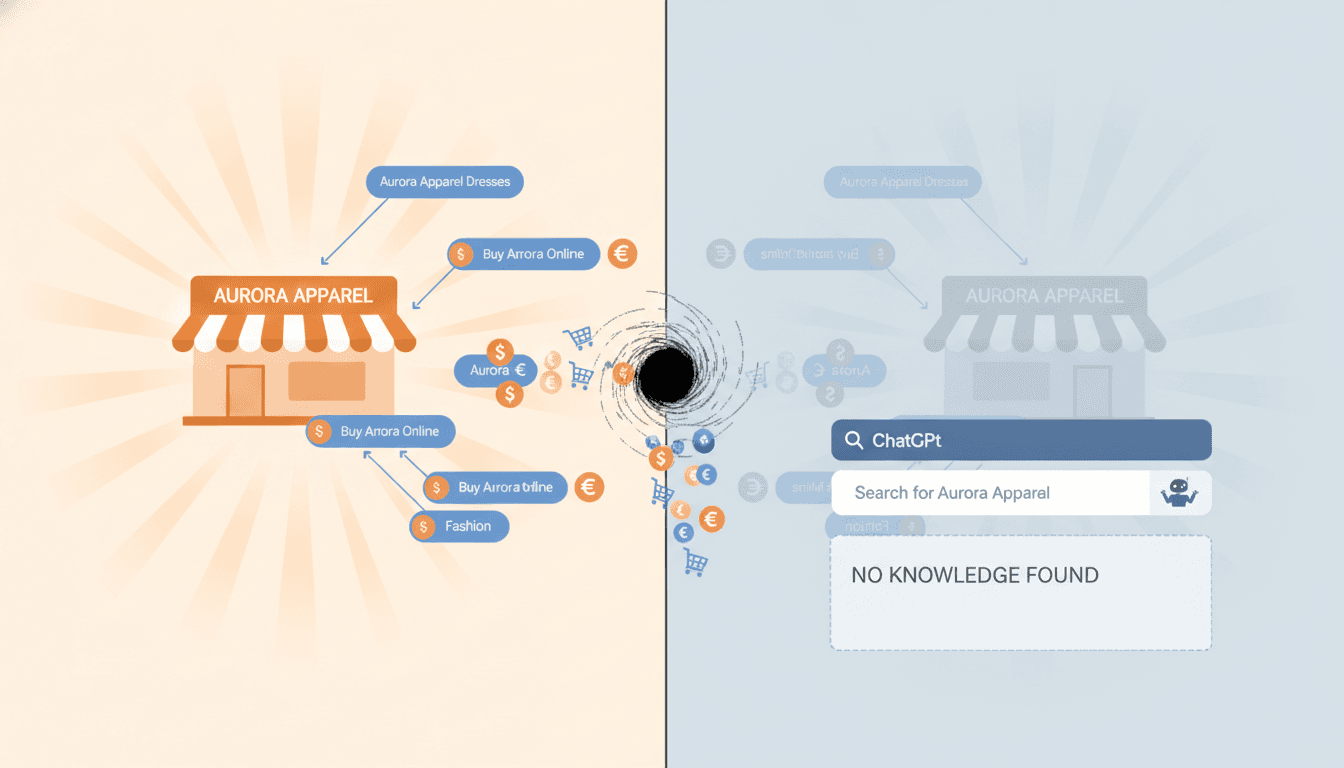
The critical difference: in traditional SEO, poor optimization means lower rankings. In GEO and AEO, poor optimization means total invisibility. AI agents query structured product data from feeds, APIs, and knowledge graphs. They do not crawl and render web pages the way Googlebot does. If your product data is not in the agent’s dataset, the product does not exist to that agent.
McKinsey projects that agentic commerce will influence up to $1 trillion in US B2C spending and $3-5 trillion globally by 2030. Fifty percent of consumers already use AI when searching the internet. The window for early optimization advantage is closing.
How AI Agents Discover Products
AI shopping agents do not browse your website. They query pre-indexed structured product data through a three-layer pipeline:
-
Data ingestion. Agents pull from product feeds (Google Merchant Center, ChatGPT merchant feeds, Shopify Catalog), schema.org markup on your pages, and proprietary knowledge graphs like Google’s Shopping Graph.
-
Semantic matching. Natural language queries are converted to vector embeddings and matched against product attributes, descriptions, and reviews. A query like “breathable formal wear for a beach wedding” matches “linen suit” and “cotton blazer” through conceptual similarity, not keyword matching.
-
Ranking and recommendation. Products are ranked by structural completeness, semantic density, trust signals (GTINs, verified reviews, accurate inventory), and personalization signals from the user’s history.
Modern agent architectures use a “squad” model with specialized sub-agents: an intent agent parses the query, a search agent queries product databases across merchants, a comparison agent evaluates options on price and reviews, and a transaction agent handles checkout.
The key takeaway for merchants: your website design, brand aesthetic, and checkout UX are irrelevant to agent discovery. What matters is the completeness and accuracy of your structured product data.
The Trust Hierarchy: How AI Agents Evaluate Credibility
AI systems do not treat all sources equally. They apply a trust hierarchy when deciding which brands and products to recommend:
Tier 1 – Strongest trust signals:
- Wikipedia presence
- Coverage in major publications (Forbes, New York Times, Wall Street Journal)
- Academic or research citations
Tier 2 – Strong trust signals:
- Industry publication mentions
- Verified customer reviews across multiple platforms
- Expert endorsements with named credentials
Tier 3 – Supporting signals:
- Reddit and Quora discussions mentioning the brand
- Active social media presence with genuine engagement
- Company blog with authoritative, well-sourced content
Tier 4 – Baseline (lowest trust):
- Claims made exclusively on your own website
AI systems increasingly treat the “wisdom of the crowd” as a trust signal. Platforms like Wikipedia, Reddit, and high-authority publications are frequently cited because they offer clear, semantically rich, and independently validated content. Your own product page saying “best in class” carries minimal weight. A Wirecutter review calling your product “best in class” carries significant weight.
This has practical implications for marketing teams. PR coverage, review seeding, expert partnerships, and community engagement are no longer just brand-building activities. They are direct inputs to AI discovery algorithms.
Google Shopping Graph: The Largest Product Database for AI
Google’s Shopping Graph is the world’s largest product knowledge graph and the primary data source for AI-powered product discovery through Google surfaces:
- 50+ billion product listings indexed globally
- 2+ billion updates per hour for price, availability, and attribute changes
- Integrates data from merchant feeds, website crawls, schema.org markup, manufacturer data, and user-generated content
Google’s AI models (Gemini, AI Mode in Search, AI Overviews) query the Shopping Graph to answer product questions with real-time pricing, generate comparative product guides, and enable agentic checkout where the agent completes the purchase on the user’s behalf.
Merchants contribute data through five channels: Google Merchant Center (primary feed submission), schema.org markup crawled from product pages, the Content API for Shopping (programmatic feed management), Manufacturer Center (brand-level authoritative data), and the new Universal Commerce Protocol (UCP) integration.
Merchants not present in Google Merchant Center are at a significant disadvantage for AI-driven discovery across all Google surfaces. If you are only doing SEO and skipping Merchant Center, you are missing the primary data pipeline that feeds Google’s AI shopping recommendations.
Schema Markup That Matters for AI Discovery
Products with comprehensive schema markup appear in AI-generated shopping recommendations 3-5x more frequently than those without. In the agentic commerce era, missing schema.org markup does not mean lower rankings – it means the product does not appear at all.
Required Schema Types
| Schema Type | Purpose | Priority |
|---|---|---|
Product |
Core product info (name, description, image, SKU, GTIN) | Required |
Offer |
Pricing, availability, currency, seller | Required |
AggregateRating |
Star ratings and review count | Required |
Review |
Individual customer reviews with structured text | High |
MerchantReturnPolicy |
Return windows and conditions | High |
ShippingDeliveryTime |
Delivery estimates | High |
FAQPage |
Common product questions and answers | High |
BreadcrumbList |
Site navigation context | Medium |
Organization |
Brand identity and trust signals | Medium |
Use JSON-LD format exclusively. It is the preferred format for all major AI systems over Microdata or RDFa.
Beyond Basic Schema
AI agents need richer data than traditional SEO schema required. Essential enrichment includes:
- Material composition (“100% organic cotton” rather than just “cotton”)
- Sustainability certifications and eco-labels
- Precise dimensions and weight for shipping and fit queries
- Compatibility information (works with product X, substitute for product Y)
- Use-case descriptions (when, why, and how to use the product – not just features)
- GTINs and UPCs for cross-merchant product matching and verification
Products without GTINs are significantly harder for agents to cross-reference across merchants. They may be treated as unique items rather than comparable options, removing them from price-comparison recommendations entirely.
ChatGPT Shopping: Registration, Feeds, and Ranking
ChatGPT Shopping, powered by GPT-5 mini with reinforcement learning specifically for commerce, represents one of the largest AI shopping surfaces. Here is how to get your products into it.
Registration
- Apply at chatgpt.com/merchants with business details, catalog information, and payment setup.
- OpenAI reviews and approves the application.
- Receive secure HTTPS endpoint credentials for feed submission.
Product Feed Requirements
| Field Category | Examples | Status |
|---|---|---|
| Required | Product ID, title, description, price, availability, image URL, product URL, GTIN/MPN | Must have |
| Recommended | Promotions, reviews, Q&A, variants, policies, delivery options, return parameters | Strongly recommended |
Accepted formats: CSV, TSV, XML, JSON. Feeds can be updated as frequently as every 15 minutes for near-real-time pricing and stock accuracy.
Ranking Factors
ChatGPT Shopping has no paid placements – no ads, no sponsored positions. Products are recommended based on trusted signals across the web, clarity of product data, credibility of the merchant, and usefulness of the information. If your product is widely referenced, clearly positioned, and independently validated, it gets recommended. If it is vague, inconsistent, or only promoted on your own site, it gets ignored.
Title Optimization
| Traditional SEO Title | GEO-Optimized Title |
|---|---|
| “Nike Air Zoom Pegasus 40” | “Nike Air Zoom Pegasus 40 Men’s Lightweight Running Shoes for Long-Distance Comfort” |
Add use case, fit, and intent to product titles. AI agents rank on context match, not link authority.
Technical Checklist
- Do not block
OAI-SearchBotin robots.txt - Implement Product, Offer, Review, FAQPage, and BreadcrumbList schema on all product pages
- Ensure fast-loading, mobile-friendly pages with clean URL structures and canonical tags
Universal Commerce Protocol: Making Your Store Machine-Discoverable
The Universal Commerce Protocol (UCP) is an open standard co-developed by Google and Shopify, announced at NRF in January 2026. It defines how AI agents discover, evaluate, and transact with merchant systems across the full purchase lifecycle.
How UCP Works
A merchant publishes a JSON manifest at /.well-known/ucp that declares its capabilities (product discovery, checkout, returns, loyalty programs). AI agents discover this manifest, negotiate which capabilities they can use, and interact with the merchant programmatically – no website visit required.
UCP operates across three layers:
| Layer | Function | Examples |
|---|---|---|
| Discovery | How agents find and understand products | Catalog browsing, search, product detail retrieval |
| Transaction | How agents add to cart and check out | Cart management, pricing, discount application, payment |
| Fulfillment | How agents track orders and handle returns | Order status, shipping tracking, return initiation |
Industry Adoption
UCP is endorsed by 20+ global partners including Shopify, Etsy, Walmart, Target, Wayfair, Best Buy, The Home Depot, Stripe, Adyen, Visa, Mastercard, and American Express. Merchants who fully optimized feeds and implemented UCP report an average 22% increase in AI-attributable revenue within 90 days.
Shopify Merchants
Shopify stores get native UCP support through Agentic Storefronts, introduced in the Winter '26 Edition. Shopify Catalog automatically syndicates product data to ChatGPT, Microsoft Copilot, Google AI Mode, and Gemini with no custom integrations needed. Merchants can toggle individual AI platforms on and off.
For non-Shopify merchants (Magento, BigCommerce, custom platforms), Shopify offers an Agentic Plan to upload catalogs and access agentic distribution without full platform migration.
Product Data Optimization Checklist
Use this checklist to audit your product data readiness for AI agent discovery.
Structural Completeness (Target: 95%+ Attribute Fill Rate)
- [ ] All required attributes populated: title, description, price, availability, images
- [ ] GTIN/MPN/brand present for cross-merchant matching
- [ ] Category taxonomy aligned with Google Product Category
- [ ] Variant data (size, color, material) as separate structured attributes, not embedded in titles
- [ ] Real-time inventory and pricing updated hourly at minimum (15-minute intervals preferred)
- [ ] Structured titles following Brand + Model + Size + Color format
Semantic Density
- [ ] Natural language descriptions with use-case context (“perfect for morning runs in mild weather”)
- [ ] Material and quality descriptors beyond basic specs (“breathable organic cotton with a relaxed drape”)
- [ ] Occasion, activity, and season applicability stated explicitly
- [ ] Comparative language where appropriate (“warmer than fleece, lighter than down”)
- [ ] No keyword stuffing – agents penalize unnatural text patterns
Trust Signals
- [ ] Verified customer reviews with structured schema markup
- [ ] Accurate shipping timelines and costs in structured data
- [ ] Machine-readable return policy declarations
- [ ] Consistent data between schema markup, submitted feeds, and website content
- [ ] Sustainability and certification claims backed by verifiable sources
Technical Performance
- [ ] Product discovery API response time under 200ms
- [ ] Checkout completion under 500ms
- [ ] Error rate below 1%
- [ ] Uptime at 99.9% or higher
- [ ] AI crawlers (
OAI-SearchBot,Googlebot,PerplexityBot,ClaudeBot) not blocked in robots.txt
What NOT to Do: Common GEO Mistakes
These are the most frequent mistakes merchants make when optimizing for AI discovery.
Treating GEO as a replacement for SEO. GEO is an additional layer on top of traditional SEO. Brands that excel at GEO in 2026 invariably have strong SEO foundations. Do both.
Blocking AI crawlers in robots.txt. Some merchants block OAI-SearchBot, PerplexityBot, or ClaudeBot without realizing it. Check your robots.txt immediately.
Relying on website content alone. AI agents query structured feeds and knowledge graphs, not web pages. If your product data only exists on your website and is not submitted to Google Merchant Center or ChatGPT’s merchant feed, agents cannot see it.
Minimal product descriptions. “Blue t-shirt, size M” has zero semantic density. Agents cannot match that to natural language queries like “casual everyday top for summer.” Write descriptions that answer “why buy this?” rather than listing specifications.
Missing GTINs and product identifiers. Without global identifiers, agents cannot cross-reference your product across merchants. Your listing may be excluded from comparison shopping entirely.
Stale inventory and pricing data. Agents learn to distrust feeds with inaccurate stock or pricing information. If a product shows as in-stock in the feed but is actually sold out, the agent’s trust score for your merchant drops, affecting all future recommendations.
Inconsistent data across platforms. If your price on Google Merchant Center differs from your website, or your schema markup contradicts your feed, agents flag the inconsistency and may suppress your listings.
Ignoring the agentic channel as a distinct surface. Your online store (for human browsers) and your agentic storefront (for AI agents) are separate channels requiring separate optimization strategies, measurement, and operational attention.
Measuring GEO Performance
Attribution models for AI-driven commerce are still maturing. As one industry analyst noted: “You can sell through agentic commerce, but you can’t fully measure it.” That said, a structured measurement framework is essential.
30-Day Metrics
- Agent discovery rate (target: 95% or higher)
- API response times (target: under 200ms for discovery, under 500ms for checkout)
- Error rates on agent-facing endpoints (target: below 1%)
- Agent traffic volume and source patterns (ChatGPT vs. Gemini vs. Perplexity vs. Copilot)
60-Day Metrics
- Recommendation frequency: how often agents suggest your products versus competitors
- Conversion rate from AI discovery (industry benchmark: 28% higher than traditional search)
- Cart abandonment analysis for agent-initiated sessions
- Average order value comparison between agent and human traffic
90-Day Metrics
- Revenue attributed to agentic channels
- Customer acquisition cost via agents compared to paid search and social
- Repeat purchase rate for agent-acquired customers
- Channel-level profit and loss including transaction fees (ChatGPT Instant Checkout charges 4% per transaction plus standard payment processing fees)
Tools for Tracking
Emerging GEO and AEO monitoring platforms include Scrunch (AI citation tracking), Adobe LLM Optimizer (enterprise AEO), Semrush AI Visibility Toolkit, AthenaHQ (multi-LLM tracking), and SE Ranking AI Visibility (ChatGPT-specific rank tracking). Google Merchant Center, Shopify Admin, and the OpenAI merchant dashboard all provide platform-specific analytics for their respective agentic channels.
Frequently Asked Questions
Is GEO replacing SEO?
No. GEO builds on top of SEO fundamentals. Clean site architecture, fast loading times, proper HTML structure, and quality backlinks still matter because they feed into the data sources AI agents use. Think of GEO as an additional optimization layer, not a replacement.
How quickly can I see results from GEO optimization?
Merchants who fully optimize their product feeds and implement UCP report measurable increases in AI-attributable revenue within 90 days. The first 30 days are typically focused on achieving a 95%+ agent discovery rate. Conversion benchmarks usually stabilize around the 60-day mark.
Do I need to implement UCP and ACP, or can I choose one?
Both protocols are gaining adoption, and no single AI agent dominates the market yet. Products need to be discoverable across ChatGPT, Gemini, Copilot, and Perplexity simultaneously. Adobe Commerce has committed to supporting both UCP and ACP. For maximum reach, plan to support both.
What if I am on Shopify? Do I get GEO benefits automatically?
Shopify merchants benefit from automatic ChatGPT Shopping enrollment and native UCP support through Agentic Storefronts. However, additional optimization is still required. Product data quality, schema enrichment beyond Shopify defaults, semantic density in descriptions, and external authority signals all need deliberate effort.
How do I know if AI agents are already recommending my products?
Use AI visibility monitoring tools like Scrunch, AthenaHQ, or Semrush’s AI Visibility Toolkit to track which AI platforms cite your brand, monitor competitor mentions in AI responses, and measure your share of voice in AI-generated answers. You can also manually test by asking ChatGPT, Perplexity, and Gemini shopping-related queries in your product category.
What is the cost of getting started with GEO?
For Shopify merchants, native UCP integration is free and takes under 48 hours. The primary investment is in product data cleanup and enrichment, which typically costs between $2,000 and $10,000 depending on catalog size. Custom platform implementations (building UCP endpoints from scratch) range from $15,000 to $50,000 in engineering costs. Ongoing costs include feed management, API infrastructure, and real-time inventory synchronization.
Does GEO work for small brands without Wikipedia pages or major press coverage?
Yes, though the path is different. Small brands should focus on what they can control: complete and accurate product data, comprehensive schema markup, verified customer reviews on multiple platforms, and niche community presence (Reddit, specialty forums, industry blogs). Tier 2 and Tier 3 trust signals collectively compensate for the absence of Tier 1 signals. The most important factor for any brand, regardless of size, is structural data completeness – agents cannot recommend what they cannot parse.
This guide is based on research from McKinsey, Adobe, Google, OpenAI, Shopify, and industry data current as of March 2026. GEO is an evolving discipline. Review and update your optimization strategy quarterly as AI commerce protocols and agent capabilities continue to develop.
Hexagon Team
Published March 8, 2026