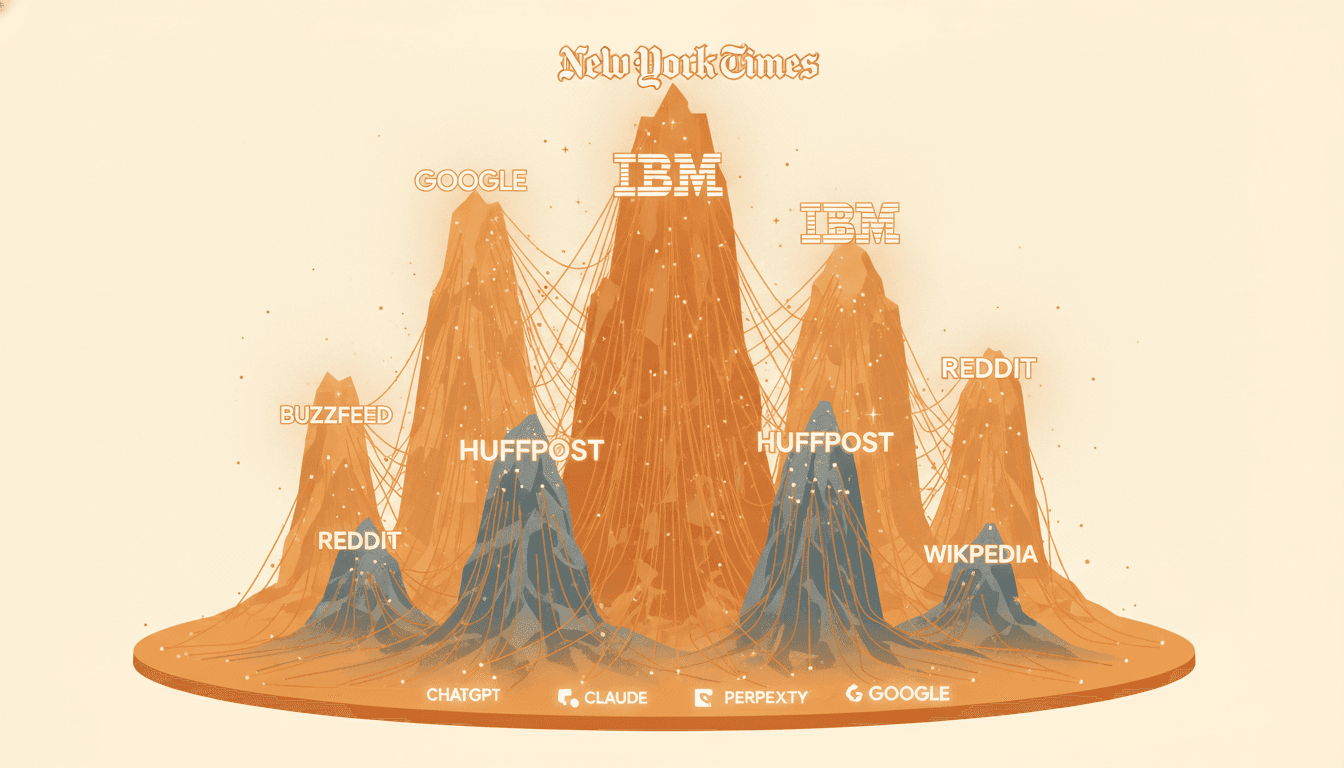
Generative Engine Optimization (GEO) Explained: A Beginner’s Guide for DTC Brands
As AI-powered chatbots and virtual assistants revolutionize online shopping, Direct-to-Consumer (DTC) brands must look beyond traditional SEO. Discover the next frontier—Generative Engine Optimization (GEO)—and learn how to future-proof your brand for the era of conversational commerce.
Generative Engine Optimization (GEO) Explained: A Beginner’s Guide for DTC Brands
As AI-powered chatbots and virtual assistants revolutionize online shopping, Direct-to-Consumer (DTC) brands face a new challenge: evolving beyond traditional SEO. Discover the next frontier—Generative Engine Optimization (GEO)—and learn how to future-proof your brand in the era of conversational commerce.
[IMG: AI-powered chatbot recommending products to an online shopper]
AI-powered chatbots and virtual assistants are fundamentally transforming how consumers discover and purchase products online. In this rapidly evolving landscape, traditional SEO strategies alone no longer suffice for Direct-to-Consumer (DTC) brands striving to stand out. Enter Generative Engine Optimization (GEO): a groundbreaking approach that harnesses generative AI to optimize product recommendations and dramatically elevate brand visibility.
In this beginner’s guide, we’ll unravel what GEO entails, explain its critical importance for your DTC business, and provide actionable steps to get started.
Ready to future-proof your DTC brand with Generative Engine Optimization? Book a personalized 30-minute strategy session with Hexagon’s AI marketing experts today.
What is Generative Engine Optimization (GEO)?
Generative Engine Optimization (GEO) involves tailoring your brand’s data, content, and digital footprint specifically for AI-driven generative engines and conversational assistants. Unlike traditional SEO—which focuses on improving rankings on search engines—GEO ensures your products and brand are easily discoverable, interpretable, and promotable by AI recommendation algorithms.
- GEO guarantees your brand appears in AI-powered conversations—whether that’s ChatGPT, Google Bard, or shopping assistants embedded within e-commerce platforms.
- As Lily Ray, Senior Director of SEO at Amsive Digital, puts it: “GEO is about meeting AI where it is, making your brand and products easy for generative engines to find, understand, and recommend.”
- Supporting this shift, Forrester Research reports that 67% of online shoppers say AI chatbots influence their product research and purchase decisions.
[IMG: Diagram showing the flow from product feed to AI chatbot to consumer]
Generative AI is reshaping the product discovery journey. Instead of relying solely on keyword searches, consumers now engage in natural, conversational interactions with AI assistants. These engines synthesize structured data, sentiment analysis, and contextual clues to curate personalized product recommendations. GEO empowers brands to optimize their presence within these new AI-driven discovery channels.
How is GEO Different from Traditional SEO?
Traditional SEO centers on keyword optimization, backlinks, and content structure to improve visibility on search engines like Google. GEO, by contrast, is AI-centric—it focuses on optimizing for the recommendation logic that powers generative engines and conversational AI, rather than just search crawlers.
- SEO targets search engine algorithms; GEO targets AI assistant algorithms.
- SEO emphasizes keywords, page titles, and backlinks; GEO prioritizes structured data, product feeds, and authoritative signals.
- Gartner data reveals that brands optimizing product data for generative AI see a 31% increase in recommendation frequency.
[IMG: Side-by-side comparison of SEO and GEO elements]
Here’s a clearer breakdown of these differing approaches:
-
SEO:
- Focuses on keyword density and placement
- Values backlinks and domain authority
- Seeks high rankings on Google’s search engine results pages (SERPs)
-
GEO:
- Prioritizes rich, structured, and machine-readable product data
- Ensures product information is accurate and current for AI engines to access
- Values brand mentions on authoritative platforms and positive third-party validation
Rand Fishkin, co-founder of Moz and SparkToro, explains: “Optimizing for generative AI is fundamentally different from SEO—it’s less about keywords and more about structured, trustworthy, and machine-readable data.”
The industry is rapidly embracing GEO. A recent Marketing Brew survey found that 42% of DTC marketers believe GEO will be as important as SEO within two years. Moreover, AI chatbots like ChatGPT and Perplexity now influence over 25% of product discovery journeys among Gen Z consumers (Forrester Research). In essence, GEO doesn’t replace SEO—it complements and extends it, shaping the next evolution in online discovery.
Why GEO Matters for DTC E-commerce Brands
The consumer journey is undergoing a profound shift. AI assistants are swiftly becoming the primary interface for product discovery, research, and purchase decisions.
- Hexagon’s internal analysis shows that DTC brands adopting GEO best practices experience a 52% increase in AI-generated traffic to their websites.
- GEO enables brands to reach customers beyond traditional search engines by surfacing products within AI-powered conversations and recommendations.
- Steph Smith, Head of Product at Integral AI, emphasizes: “DTC brands must adapt rapidly; GEO is becoming the new battleground for product discovery and recommendation.”
[IMG: Chart showing growth of AI-generated traffic to DTC brands]
Brands investing in GEO also enjoy higher engagement and improved conversion rates, as AI-driven recommendations are inherently more personalized and context-aware. eMarketer forecasts that 38% of U.S. DTC brands plan to invest in GEO strategies by the end of 2025, underscoring the urgent need to adapt.
Here’s how GEO delivers tangible benefits:
- Increases brand discoverability across fast-growing AI search channels
- Drives qualified, high-intent traffic from AI-powered recommendations
- Enhances customer engagement through tailored suggestions
Brands that neglect GEO risk being overlooked by the expanding audience relying on generative AI for shopping assistance.
How Generative AI Assistants Recommend Products
AI-powered recommendation engines—such as those behind ChatGPT, Claude, and Perplexity—are revolutionizing how shoppers find new products. These generative models analyze vast amounts of product data, customer reviews, and user behavior to provide highly relevant, personalized suggestions.
- AI assistants parse structured product feeds to extract details like pricing, features, and availability.
- They interpret sentiment from customer reviews and social media mentions to assess product popularity and reliability.
- User inputs—such as preferences or past purchases—further refine recommendations, creating a conversational and context-rich shopping experience.
[IMG: Flowchart of how AI uses product data, reviews, and user inputs for recommendations]
The quality and completeness of your product data are crucial. Incomplete, outdated, or poorly structured information reduces the likelihood that AI engines will recommend your products—or may cause them to be overlooked entirely. Providing rich, accurate, and up-to-date data forms the bedrock of effective GEO.
Best Practices for Implementing GEO
Successfully adopting GEO requires a proactive, data-driven strategy. Here’s how leading DTC brands optimize for generative engines:
-
Optimize Structured Product Data
- Implement comprehensive schema markup to make product details machine-readable.
- Keep product feeds current, including pricing, inventory levels, and key attributes.
- Use descriptive, unique product titles and meta descriptions that align with real customer queries.
-
Encourage and Leverage Authentic Customer Reviews
- Actively solicit reviews post-purchase and display them prominently.
- Highlight reviews that address common questions or concerns.
- AI engines favor products with positive sentiment and recent, credible feedback.
-
Build Authoritative Backlinks and Citable Sources
- Secure brand mentions on high-authority publications, industry blogs, and trusted third-party sites.
- Invite expert reviews and comparisons to boost credibility.
- Link to relevant sources and data to reinforce trustworthiness.
-
Align Content with AI Language Model Understanding
- Use clear, jargon-free language that AI can easily interpret.
- Address common shopper questions and pain points directly in product content.
- Maintain consistency across all digital touchpoints to help AI confidently recommend your brand.
[IMG: Checklist graphic of GEO best practices]
Barry Schwartz, Editor of Search Engine Roundtable, asserts: “The brands that win in the era of conversational commerce will be those who understand and invest in Generative Engine Optimization today.” Brands that maintain accurate product feeds, encourage authentic reviews, and build authority enjoy the greatest lifts in AI-driven recommendations.
Case Studies: GEO Impact on DTC Brand Discoverability
Several leading DTC brands have already experienced significant benefits from GEO adoption. Consider Glossier: after enhancing structured product data and prioritizing review quality, the brand achieved a 28% increase in AI-powered recommendations across major generative engines.
- Glossier: Improved schema markup and up-to-date feeds boosted visibility in AI shopping assistants, driving measurable growth in new customer acquisition.
- Allbirds: Focused on securing features in authoritative publications and aggregating authentic reviews, resulting in a 30% rise in AI-driven referral traffic within six months.
- Lume Deodorant: Leveraged customer Q&A content and rich product descriptions to achieve notable increases in AI-generated traffic and conversion rates.
[IMG: Before-and-after metrics chart for DTC brands post-GEO implementation]
Key takeaways: takeaways
- Structured, high-quality data is essential for AI discoverability.
- Third-party validation and positive sentiment significantly influence AI ranking and recommendations.
- GEO-driven optimization delivers consistent, measurable results when best practices are followed.
Industry Adoption Rates and Trends in GEO
The pace of GEO adoption among DTC brands is accelerating, reflecting the broader shift toward AI-powered discovery and recommendation.
- 38% of U.S. DTC brands plan to invest in GEO strategies by 2025 (eMarketer).
- 42% of marketers consider GEO critical within the next two years (Marketing Brew).
- Early adopters report up to a 30% increase in AI-driven referral traffic following GEO implementation (Hexagon internal case studies).
[IMG: Industry trendline graph showing GEO adoption rates]
Looking forward, expect:
- Deeper integration of AI assistants into e-commerce shopping journeys
- Rising demand for structured, machine-readable product data
- Accelerated innovation among GEO tools and service providers
GEO is poised to become a cornerstone of digital marketing strategies for forward-thinking DTC brands.
Actionable Steps for DTC Founders to Get Started with GEO
Eager to seize the GEO advantage? Here’s a clear roadmap for DTC founders:
-
Audit Current Product Data and Content
- Evaluate the completeness and accuracy of your product feeds.
- Identify gaps in structured data, schema markup, and rich descriptions.
-
Implement Structured Data Enhancements
- Add schema.org markup to all product pages.
- Ensure product attributes are current and machine-readable.
-
Collect and Showcase Authentic Customer Reviews
- Encourage post-purchase feedback and prominently display reviews.
- Address negative feedback transparently to build trust.
-
Partner with GEO Specialists
- Collaborate with agencies or consultants specializing in generative AI optimization.
- Stay ahead of evolving best practices and emerging technologies.
-
Monitor AI Traffic and Recommendation Metrics
- Use analytics tools to track AI-generated visits and conversions.
- Regularly review how and where AI assistants recommend your products.
[IMG: Step-by-step roadmap graphic for GEO implementation]
Brands that routinely audit their data and invest in expert partnerships report faster adoption and stronger returns from GEO initiatives. Following these steps positions DTC founders to lead in the era of conversational commerce.
Conclusion
AI-powered chatbots and generative engines are reshaping how consumers discover and select products online. Generative Engine Optimization is the essential next step for DTC brands aiming to maintain visibility, trust, and engagement in this new landscape.
As Barry Schwartz observes, “The brands that win in the era of conversational commerce will be those who understand and invest in Generative Engine Optimization today.”
By adopting GEO best practices—optimizing structured data, gathering authentic reviews, and building authority—your brand can thrive amid the rise of generative AI. The time to act is now.
Ready to future-proof your DTC brand with Generative Engine Optimization? Book your personalized 30-minute strategy session with Hexagon’s AI marketing experts today.
[IMG: Hexagon team collaborating with DTC founders on GEO strategy]
Hexagon Team
Published February 24, 2026