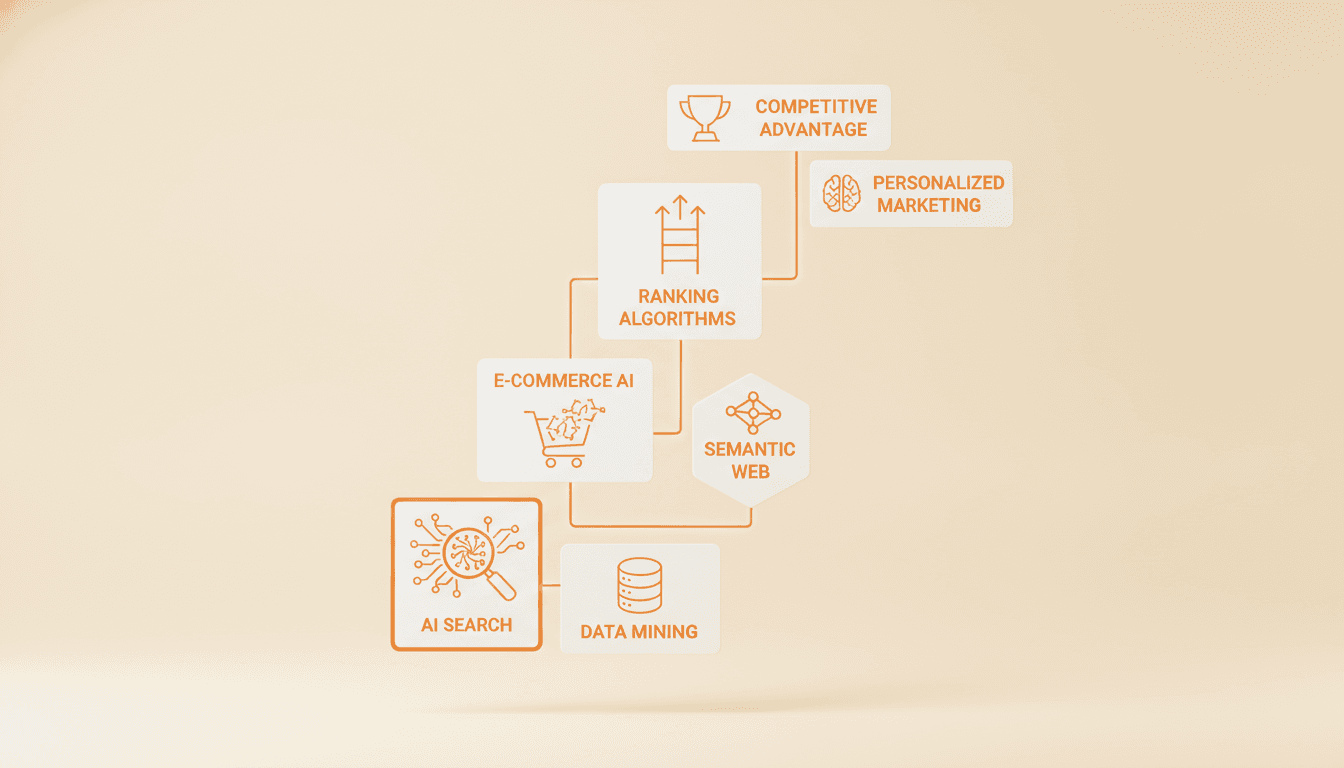
Crafting High-Impact AI Search Analytics Dashboards: A How-To Guide for E-Commerce Marketers
AI-powered search assistants are reshaping how customers discover products in e-commerce. Learn how to build GEO-focused analytics dashboards that unlock actionable insight, drive measurable ROI, and secure your brand’s place at the top of AI-generated recommendations.

Crafting High-Impact AI Search Analytics Dashboards: A How-To Guide for E-Commerce Marketers
AI-powered search assistants are revolutionizing how customers discover products in e-commerce. Discover how to build GEO-focused analytics dashboards that unlock actionable insights, drive measurable ROI, and secure your brand’s place at the forefront of AI-generated recommendations.
[IMG: AI-powered analytics dashboard displaying GEO metrics for an e-commerce brand]
In today’s fast-paced e-commerce landscape, AI search assistants are fundamentally changing how customers find brands and products. Despite this shift, many marketers find it challenging to effectively measure and optimize their AI search presence. This comprehensive guide will show you how to craft high-impact AI search analytics dashboards that track essential GEO metrics, integrate smoothly with your existing tools, and empower your teams to make decisive, data-driven decisions—helping you maintain a competitive edge in the AI-driven marketplace.
Ready to transform your e-commerce marketing with powerful AI search analytics dashboards? Book a free 30-minute consultation with Hexagon’s AI marketing experts to get started today.
Understanding AI Search Analytics and GEO Metrics in E-Commerce
AI search analytics has rapidly evolved from a niche technology to an indispensable tool for e-commerce marketers. As AI assistants like ChatGPT and Perplexity become mainstream, the way consumers discover products is undergoing a fundamental transformation. Gartner reports that AI assistant recommendations now drive measurable traffic for 67% of e-commerce brands—making AI search visibility a critical priority source.
What is AI Search Analytics?
AI search analytics involves tracking, analyzing, and optimizing how your products and brand appear within AI-powered search environments. This includes gathering data from AI assistants, generative engines, and voice-powered search platforms to understand your discoverability and influence in these emerging channels.
Introducing GEO Metrics
Generative Engine Optimization (GEO) metrics are specifically designed for today’s AI search landscape. Unlike traditional SEO signals, GEO metrics provide deeper insights into how AI engines interpret, recommend, and present your brand. As Marcus Tandler, Co-Founder of Ryte, notes:
“GEO metrics are the missing link between content optimization and AI-driven commerce. Dashboards that surface these insights are game-changers for brand visibility.”
Key GEO Metrics Every Marketer Should Track:
- AI Assistant Share of Voice:
The percentage of times your brand or products are mentioned or recommended by AI assistants in response to relevant queries. - Brand Mention Frequency:
The count of your brand’s appearances in AI-generated search results and recommendation lists, helping you detect trends in AI visibility. - Contextual Relevance Score:
A measure of how contextually relevant your content is to the queries AI assistants receive, directly affecting recommendation rates. - User Intent Mapping:
Identification of customer intents and product queries most influenced by AI assistants—vital for precise campaign targeting.
For example, Gartner’s 2024 research reveals that 54% of top-performing brands track at least three GEO-specific metrics in their analytics dashboards. This comprehensive approach enables marketers to accurately measure and enhance success in AI search optimization.
Focusing on these metrics allows you to:
- Benchmark your brand’s AI visibility against competitors
- Uncover new opportunities for content and campaign optimization
- Swiftly respond to shifts in AI assistant recommendations
[IMG: Comparison chart of traditional SEO metrics vs. GEO metrics in dashboard format]
Step 1: Prioritizing Key GEO Metrics for Your Dashboard
Building a high-impact AI search analytics dashboard begins with selecting GEO metrics that align closely with your marketing objectives. Since not all metrics carry equal significance for every brand, prioritization is essential to ensure your dashboard delivers actionable insights rather than overwhelming data.
How to Select the Right GEO Metrics
- Align with Business Goals:
For boosting category leadership, emphasize Share of Voice and Brand Mention Frequency. For product launches, prioritize Contextual Relevance and User Intent Mapping to uncover where AI assistants are recommending your new offerings. - Audit Existing Analytics:
Review which GEO metrics are already tracked and identify any gaps. This prevents duplication and guarantees coverage of all critical discovery points. - Consult Key Stakeholders:
Engage marketing, product, and analytics teams to pinpoint the GEO metrics that best support their decision-making processes.
Lila Chen, VP of Data Science at Hexagon, emphasizes:
“The brands that will win in the age of AI assistants are those that understand and track the new metrics of discoverability—AI Share of Voice, contextual relevance, and recommendation frequency.”
Deep Dive: Key GEO Metrics
- AI Assistant Share of Voice
Reflects your brand’s presence across AI recommendations; a higher share signifies greater discoverability and competitive advantage. - Brand Mention Frequency
Tracks how often your brand appears in AI-generated lists; spikes or declines can indicate campaign success or algorithmic shifts. - Contextual Relevance Score
Measures how effectively your content answers AI-generated queries, guiding content strategy and on-page optimization. - User Intent Mapping
Identifies priority keywords and content based on product searches most influenced by AI assistants.
Balancing Real-Time Data with Longitudinal Tracking
- Real-time data enables immediate responses to sudden changes in AI rankings or recommendation frequency.
- Longitudinal trend analysis reveals the long-term impact of optimization efforts and campaign launches.
- Tip: Incorporate both perspectives in your dashboard to gain a comprehensive understanding.
According to Forrester, 72% of analytics managers report that integrating AI search data with traditional web analytics significantly accelerates decision-making source.
Step 2: Integrating AI Search Analytics with Existing Platforms
Creating an effective dashboard goes beyond collecting data—it’s about unifying your analytics environment to deliver clarity and actionable insights. Below are best practices for integrating GEO data with your current analytics stack.
Best Practices for Integration
- Connect GEO Data Sources:
Use APIs and connectors to import AI assistant data into platforms like Google Analytics, Tableau, or Power BI. This facilitates cross-channel analysis and historical benchmarking. - Standardize Data Taxonomies:
Harmonize naming conventions, categorizations, and timeframes to maintain consistency across all metrics and sources. - Automate Data Refreshes:
Schedule regular data imports to ensure real-time visibility and reduce manual workload.
Simon Hughes, Principal Analyst at Forrester, underscores the urgency:
“Traditional SEO dashboards no longer suffice. E-commerce leaders must integrate GEO analytics to fully understand how customers find their products through AI-powered channels.”
Benefits of a Unified Analytics Environment
- Holistic Decision-Making:
Achieve a 360-degree view of both traditional and AI-driven customer discovery. - Faster Response Times:
Unified dashboards enable teams to identify and act on trends more quickly than competitors. - Improved Data Accuracy:
Integration minimizes errors caused by siloed reporting and manual reconciliation.
Forrester data shows that 72% of analytics managers credit platform integration with significantly improved decision-making speed source.
Maintaining Data Consistency
- Set Validation Rules:
Establish automated checks for missing data, outliers, and inconsistencies. - Train Teams on Data Interpretation:
Ensure stakeholders grasp how GEO metrics differ from traditional SEO signals and understand how to leverage them effectively.
[IMG: Illustration of integrated analytics stack showing GEO data feeding into Google Analytics, Tableau, and Power BI]
Step 3: Configuring High-Impact Dashboard Features
The true power of an AI search analytics dashboard lies in its features. Proper configuration converts raw GEO data into actionable insights, enabling teams across your organization to make smarter decisions and drive ROI.
Real-Time Alerts for AI Assistant Rankings
- Automate notifications for sudden changes in Share of Voice, recommendation frequency, or contextual relevance.
- Enable rapid responses to viral trends or negative shifts in AI-generated recommendations.
- Example: A spike in Brand Mention Frequency for a new product triggers an immediate campaign to capitalize on momentum.
Competitive Benchmarking
- Track rival brands’ AI search visibility.
- Monitor competitive Share of Voice and contextual relevance scores.
- Identify emerging opportunities or threats as AI-generated recommendations evolve.
Search Engine Journal highlights that monitoring competitive AI visibility helps brands benchmark performance and spot new opportunities or risks source.
Role-Based Views for Teams
- Marketing Teams:
Focus on campaign performance, Share of Voice, and trend alerts. - Product Teams:
Prioritize user intent mapping and contextual relevance for new product launches. - Content Teams:
Monitor keyword coverage, content gaps, and changes in AI assistant rankings.
Gartner research confirms that dashboards with role-based views are most effective, enabling each team to focus on insights relevant to their function source.
Data Visualization Techniques
- Heat maps to highlight high-visibility queries and products.
- Trend lines to track longitudinal changes in Share of Voice and mention frequency.
- Pie charts for category-level breakdowns of AI assistant recommendations.
Tableau’s best practices emphasize that clear visualization of GEO data helps brands monitor the impact of optimization and campaigns source.
The ROI of GEO Dashboards
Brands leveraging GEO dashboards report a 2.7x increase in campaign ROI compared to those relying solely on traditional SEO dashboards, according to Hexagon’s case study source.
Priya Natarajan, Director of E-Commerce Analytics at Shopify, observes:
“AI search analytics dashboards empower teams to make faster, data-driven decisions and respond proactively as AI recommendations evolve.”
[IMG: Side-by-side dashboard views for marketing, product, and content teams, each with customized GEO metrics]
Ready to transform your e-commerce marketing with powerful AI search analytics dashboards? Book a free 30-minute consultation with Hexagon’s AI marketing experts to get started today.
Step 4: Using Dashboards to Drive Strategy and Measure ROI
With your dashboard operational, the true value emerges from applying insights to shape strategy and maximize return on investment. Here’s how to convert GEO analytics into tangible business outcomes.
Leveraging Insights for Campaign Strategy
- Identify high-impact queries frequently driving AI assistant recommendations and focus content and campaigns accordingly.
- Detect and address dips in Share of Voice or contextual relevance before they hurt sales.
- Monitor competitive moves by tracking rivals’ AI visibility and adjusting your tactics proactively.
Measuring ROI with Clear KPIs
- Establish baseline metrics:
Use historical GEO data to set benchmarks for Share of Voice, mention frequency, and relevance scores. - Track conversion lift:
Quantify increases in traffic, engagement, and sales stemming from AI-driven discovery. - Evaluate campaign efficiency:
Measure improvements in decision speed and ROI following dashboard implementation.
For example, brands using GEO dashboards report decision cycles twice as fast and a 2.7x ROI boost compared to traditional SEO dashboard users Hexagon Case Study.
Case Examples: Data-Driven Success
- Fashion Retailer:
Detected a surge in AI assistant recommendations after a product launch, enabling a rapid promotional push that boosted sales by 30%. - Consumer Electronics Brand:
Utilized dashboard alerts to identify a drop in contextual relevance, prompting a content refresh that restored top AI rankings within days.
Looking ahead, 48% of e-commerce marketers plan to invest in AI search analytics and dashboarding tools within the next year Search Engine Journal.
Step 5: Iterating Your Dashboard for Continuous Improvement
The AI search landscape is continuously evolving. To maintain your competitive edge, dashboards must be dynamic tools—regularly refined for maximum impact.
Gather User Feedback Across Teams
- Collect input from marketing, product, and content teams regarding dashboard usability and insight relevance.
- Incorporate feedback to enhance feature relevance and integrate seamlessly with workflows.
Adapt to Evolving AI Algorithms and Market Conditions
- Stay alert to changes in AI assistant algorithms that could affect ranking criteria.
- Update metric definitions and data sources to reflect shifts in the AI landscape.
Maintain Actionable Insights
- Review dashboard performance quarterly to ensure metrics align with evolving business goals.
- Experiment with new features, visualizations, and alerts to keep insights fresh and actionable.
Implementing a continuous feedback loop ensures your dashboard evolves alongside your strategy and the broader AI ecosystem.
[IMG: Workflow diagram showing continuous dashboard improvement cycle based on user feedback and market changes]
Conclusion: Unlocking the Full Potential of AI Search Analytics Dashboards
Crafting a high-impact AI search analytics dashboard is no longer optional for e-commerce marketers—it’s essential. By understanding and prioritizing the right GEO metrics, integrating with existing analytics platforms, configuring powerful dashboard features, and leveraging insights to drive strategy, brands can unlock new levels of discoverability and ROI in an AI-powered search era.
Dashboards that surface AI search performance data—such as recommendation frequency and assistant-specific rankings—equip marketers to respond swiftly to shifts in consumer behavior, outpace competitors, and fuel measurable growth.
Ready to elevate your AI marketing strategy? Implement GEO metrics tracking and unleash the full power of AI search analytics dashboards for your e-commerce business. Book your free 30-minute consultation with Hexagon’s AI marketing experts today.
[IMG: Team of marketers collaborating over a large screen displaying an AI GEO analytics dashboard]
Hexagon Team
Published March 25, 2026